You Did a Whole Lot of Nothing Today
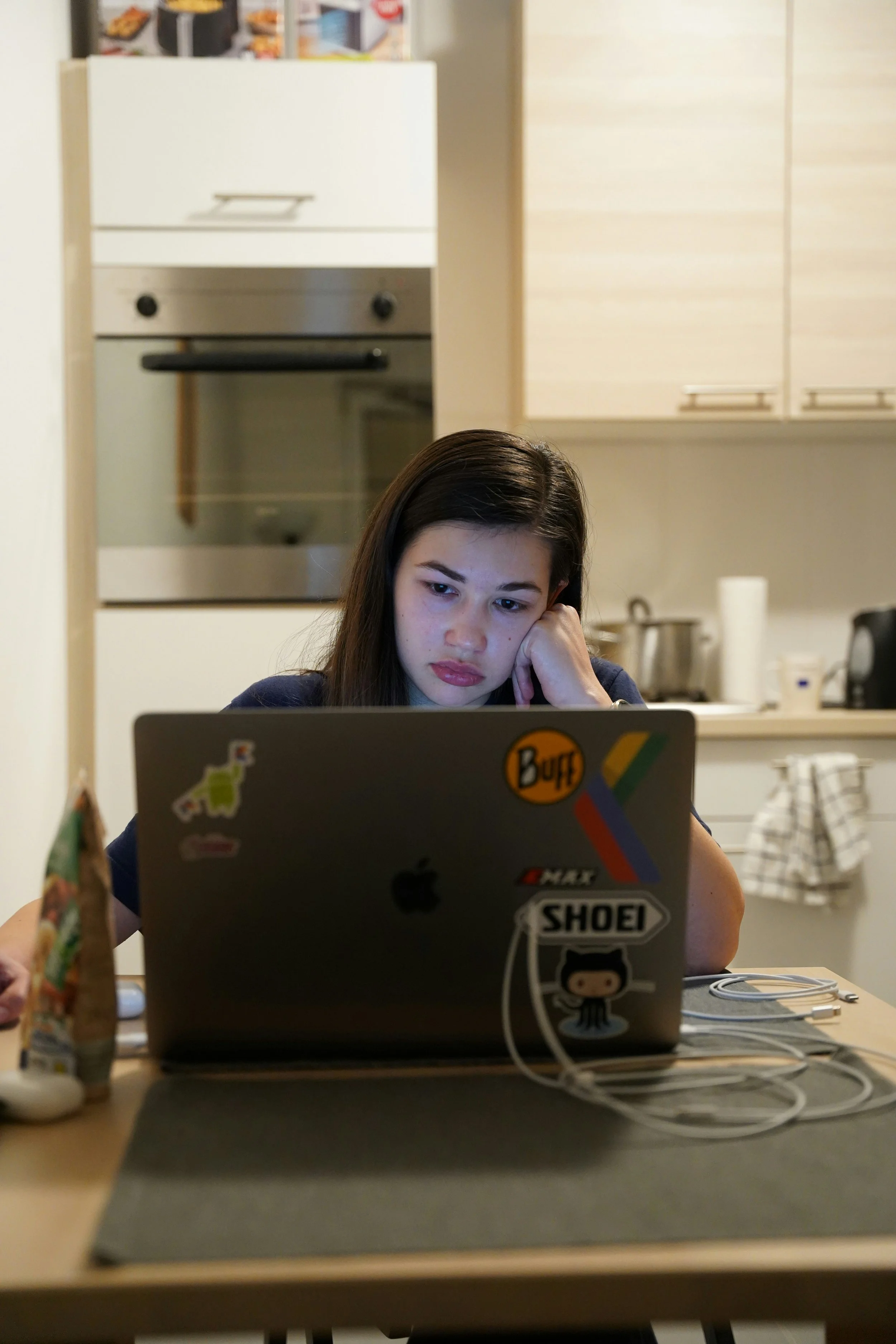
And you know it
You spent all day "working."
You organized files. You answered emails that could have waited. You researched that thing you don't actually need to research right now. You cleaned your workspace. You made a list. You checked social media "just for a minute." You got coffee. You made another list. You checked email again. You rearranged your desk.
And at the end of the day, the ONE THING you actually needed to do?
Still sitting there. Untouched. Mocking you.
You're exhausted. But you did nothing that matters.
Tomorrow, the pressure is worse. The deadline is closer. The stakes are higher.
And you'll do it again.
This isn't laziness. This is something far more insidious.
This is rebellion disguised as busyness. Self-sabotage wrapped in productivity theater. Distraction weaponized against your own dreams.
And it's killing what you're capable of, one "busy" day at a time.
The Productivity Theater
Let's be honest about what you did today.
You were busy. You looked productive. If someone walked by your desk, they'd see you working.
But you weren't doing the hard thing. The important thing. The thing that would actually move your life forward.
You were doing everything except that.
And here's the twisted part: it felt productive. Checking things off a list feels good. Organizing feels like progress. Research feels important.
But it's theater. Performance. Motion without movement.
You know this. You've known it all day.
That uncomfortable feeling in your stomach? That's you knowing you're avoiding the real work. That you're spending your precious time, your limited energy, your finite life on tasks that don't actually matter.
And tomorrow, you'll be angry at yourself. Again.
Because at the end of the day, despite being "busy" for 8-10 hours, you accomplished nothing meaningful.
You did a whole lot of nothing.
What You're Really Doing
Let's call it what it is.
You're procrastinating.
Not the "I'll do it later" kind. The sophisticated kind. The kind where you look busy, feel busy, but are strategically avoiding the work that actually matters.
This is procrastination with a productivity mask on.
And underneath that mask? There's something deeper happening.
Something you might not have admitted to yourself yet.
The Rebellion Underneath
Here's what you're not saying out loud:
"It's not fair that I don't get to do what I truly want."
Maybe you'd rather be painting. Writing. Building something of your own. Traveling. Creating. Living differently.
But instead, you have this job. These obligations. These responsibilities. This life you didn't entirely choose.
And you resent it.
Not consciously, maybe. Not in words. But in your actions.
The procrastination is rebellion.
It's your passive-aggressive "fuck you" to a life that demands things you don't want to give. To obligations that feel imposed. To responsibilities that feel suffocating.
"If I can't have what I want," your subconscious whispers, "I won't do what I 'should' either."
So you sabotage. Not loudly. Not obviously. Just... slowly.
You do the minimum. You wait until the last minute. You create your own crisis. You prove, to yourself and everyone else, that you can't quite handle it.
And in a twisted way, there's power in that.
If you fail, you don't have to keep trying. If you barely succeed, expectations stay low. If you're always in crisis, no one asks for more.
Procrastination becomes protection.
Protection from expectations. From responsibility. From the pressure of being fully capable.
From having to admit: I could do this. I just don't want to.
The Self-Sabotage Cycle
You know what's coming.
You see the deadline. You know what needs to be done. You even know, roughly, how to do it.
But you don't start.
Instead:
Week 1: "I have plenty of time." (You scroll, you distract, you do easier things.)
Week 2: "I'll start tomorrow." (You don't. Tomorrow becomes the next day. Then the next.)
Week 3: "Okay, I really need to start." (You make a detailed plan. Research extensively. Prepare to prepare. Don't actually start.)
Week 4: "FUCK. It's due in 3 days." (Panic. Adrenaline. Frantic scrambling. Mediocre work produced in crisis mode.)
Result: You finish. Barely. It's not your best work. You're exhausted. You swear you'll never do this again.
Next project: Repeat cycle.
Why?
Because you've trained yourself that this is how you work.
Crisis creates urgency.
→ Urgency overrides resistance.
→ Panic gets you moving.
But it's killing you.
The constant stress. The poor-quality work. The perpetual guilt. The lost sleep. The knowledge that you could do better if you just... started.
You're sabotaging yourself.
Not because you're broken. Because somewhere, deep down, you believe:
If I try my best and fail, that means I'm not good enough
If I try my best and succeed, now everyone expects that always
If I can blame the rushed timeline, I don't have to face my own limitations
If I'm always in crisis, I have an excuse for mediocrity
The self-sabotage protects your ego. But it destroys your potential.
The Distraction Economy
Here's what makes it worse:
Everything is designed to distract you.
Your phone buzzes. Notifications pop up. Emails demand immediate attention. Social media is engineered to hijack your attention and never give it back.
You're not just procrastinating. You're being actively distracted by tools designed to keep you distracted.
Every app wants your attention. Every platform profits from your distraction. Every notification is optimized to pull you away from whatever you were doing.
And you let it.
Because distraction is easier than doing hard work.
Scrolling is easier than writing. Checking email is easier than making the phone call. Organizing files is easier than starting the project.
Distraction feels productive. It looks like something. It requires no deep thought, no emotional risk, no confrontation with your own inadequacy.
And at the end of the day, when you've been "busy" but accomplished nothing?
You blame the distractions.
"I would have done it, but I got so many emails."
"I would have finished, but everyone kept interrupting me."
"I would have started, but my phone kept going off."
But here's the truth: You chose the distractions.
You left your email open. You kept your phone on your desk. You "just quickly checked" social media.
The distractions are not happening TO you. You're using them.
Using them to avoid discomfort. To escape pressure. To delay the hard work.
You're complicit in your own distraction.
What's Really Happening
Underneath the procrastination, underneath the distraction, underneath the rebellion…
You're avoiding discomfort.
Not the discomfort of the task itself. The emotional discomfort that comes with it.
You're avoiding:
Fear of failure. "What if I try my best and it's not good enough?"
If you procrastinate and rush, you have an excuse. "I could have done better if I'd had more time." But if you give it your full effort and full time, and it still fails? Now you have to face that maybe you're not as capable as you thought.
Fear of success. "What if I do this well and now everyone expects this level always?"
Success raises the bar. Success creates expectations. Success means you can't hide behind "I'm trying my best" anymore. Because if you succeed, everyone knows what you're actually capable of.
Fear of judgment. "What if people see my work and criticize it?"
As long as it's half-assed, you can dismiss criticism. "Yeah, I rushed it." But if you put real effort in and people still don't like it? That's personal. That's rejection of your actual work, not just a rushed version.
Perfectionism paralysis. "If I can't do it perfectly, why start?"
If the standard is perfection, everything you produce will fall short. So why produce anything at all? Why try if it won't be perfect? Better to not start than to create something flawed.
Identity protection. "I'm not someone who does hard things."
Your identity is comfortable. It's familiar. Even if it's "I'm someone who procrastinates" or "I'm not very disciplined" or "I'm a creative who doesn't do boring work."
Starting, really trying, threatens that identity. What if you follow through and discover you're actually capable? Now you can't hide behind "that's just not who I am."
The work itself is triggering these fears. So you avoid the work.
Simple. Self-protective. Sabotaging.
The Cost
You know what this is costing you.
Your dreams. Every day you don't do the work is a day your dreams stay dreams. Someday becomes never. Potential becomes regret.
Your self-respect. Every time you break a promise to yourself, you trust yourself less. Every time you say "I'll do it tomorrow" and don't, you prove to yourself that your word doesn't mean anything.
Your opportunities. Projects not finished. Applications not submitted. Ideas not executed. Every procrastinated task is an opportunity that passes you by.
Your health. The stress of constant deadline panic. The cortisol flooding your system. The sleep you lose scrambling at the last minute. The nervous system stuck in perpetual activation because you're always in crisis mode.
Your relationships. Snapping at people because you're stressed about what you haven't done. Canceling plans because you have to finish what you should have started weeks ago. Being present in body but not mind because you're mentally cataloging all the things you're avoiding.
Your integrity. The gap between who you say you are and who you're actually being. The promises made and not kept. The commitments half-honored. The slow erosion of being someone who does what they say they'll do.
And underneath all of it: the knowledge that you're capable of more.
That's the real cost.
Not that you're failing. But that you're failing on purpose. Not that you can't do better. But that you're choosing not to.
You're sabotaging the very life you say you want.
And you're doing it every single day.
Why Willpower Won't Fix This
You've tried.
You've told yourself "This time will be different."
You've made plans. Set alarms. Created accountability systems. Downloaded productivity apps. Read articles about time management.
And you still procrastinate.
Because willpower is not the problem.
Willpower is a limited resource. It depletes throughout the day. And when you're fighting against fear, rebellion, and a nervous system that associates the task with threat?
Willpower doesn't stand a chance.
You can't think your way out of an emotional problem.
You can't discipline your way out of a nervous system response.
You can't productivity-hack your way out of self-sabotage that's protecting something deeper.
You need different tools.
Not more motivation. Not more discipline. Not another time management system.
You need to address what's underneath the procrastination.
The nervous system dysregulation that makes focus impossible. The fear that makes starting feel dangerous. The resentment that fuels rebellion. The perfectionism that makes "good enough" feel like failure.
You need to rebuild your relationship with discomfort, with failure, with effort itself.
And that requires something deeper than a productivity app.
What Actually Works
1. Nervous System Regulation First
You cannot focus from a dysregulated state.
If your nervous system is in fight-or-flight (which it is when you're stressed about a deadline), your prefrontal cortex, the part of your brain responsible for planning, focus, and impulse control, goes offline.
You're trying to do deep work from survival mode. It doesn't work.
Before you can focus, you need to regulate. Breathwork. Grounding. Somatic practices that signal safety to your nervous system.
Regulation creates capacity for focus. Without it, you're fighting your own biology.
2. Tolerance for Discomfort
Procrastination is discomfort avoidance.
The only way out is through.
You need to build capacity to sit with discomfort without immediately distracting yourself.
This means:
Noticing the urge to avoid
Naming the discomfort ("This feels hard. I'm scared it won't be good enough.")
Sitting with it for 2 minutes without acting on it
Starting the task anyway, while uncomfortable
Discomfort is not danger. It's just discomfort.
The more you practice tolerating it, the less power it has.
3. Addressing the Fears
You can't outrun fear. You have to face it.
Fear of failure? Decide that "done imperfectly" is better than "not done." Redefine failure as "didn't try," not "tried and it wasn't perfect."
Fear of success? Recognize that success doesn't mean perfection forever. You're allowed to do good work sometimes and mediocre work other times. One success doesn't obligate you to constant excellence.
Fear of judgment? Understand that judgment is inevitable. Someone will always have an opinion. Your job is to do the work anyway. Not to control their response.
Perfectionism? Lower the bar. "Good enough" is enough. B+ work submitted is infinitely more valuable than A+ work never finished.
4. Environment Design
Remove the distractions.
Phone in another room. Email closed. Social media apps deleted. Internet blocker on.
You cannot rely on willpower to resist distraction. Design your environment so distraction isn't available.
If your phone is on your desk, you will check it. If email is open, you will refresh it. If distractions are available, you will use them.
Make focus the path of least resistance.
5. Starting Small
You don't need to work for 4 hours straight.
You need to work for 10 minutes. Right now. On the actual task.
Not planning the task. Not researching for the task. Not organizing to prepare for the task.
The actual task. For 10 minutes.
That's it. You can do anything for 10 minutes.
And once you start, momentum builds. The hardest part is starting. The second hardest part is the first 5 minutes.
After that, it gets easier.
6. Identity Work
Who are you?
Are you someone who follows through? Or someone who quits?
Are you someone who does hard things? Or someone who avoids them?
Are you someone who can be trusted, by yourself, to do what you say you'll do?
Your identity drives your behavior.
If your identity is "I'm a procrastinator," you'll procrastinate. If your identity is "I'm someone who finishes what they start," you'll finish.
You get to choose your identity. And then live into it.
The Real Question
Here's what it comes down to:
Do you want to keep living like this?
Busy but unproductive. Stressed but accomplishing nothing. Exhausted but unfulfilled.
Watching your dreams stay dreams. Your potential stay potential. Your "someday" become "never."
Or are you ready to stop sabotaging yourself?
To sit with discomfort instead of avoiding it. To face your fears instead of running from them. To do the hard work instead of performing busyness.
To actually produce something meaningful with your time on this earth.
Because here's the truth:
You're going to die someday.
And when you look back, do you want to see a lifetime of "I was busy" and "I meant to"?
Or do you want to see work that mattered? Things you actually finished? A life you actually lived instead of postponed?
Procrastination is not neutral. It's not harmless.
It's the slow death of your potential. One distracted day at a time.
What Happens Next
This is where most people stop.
They read something like this. They feel uncomfortable. They recognize themselves. They think "I should change."
And then they do nothing.
They close the tab. They get distracted. They procrastinate on addressing their procrastination.
Don't be most people.
If this resonated, if you saw yourself in these words, do something about it.
Right now. Not tomorrow. Now.
Here's what you can do:
1. Read the companion blog:"The Focus Extinction: Why You Can't Sit Still Anymore" Understanding why focus is dying and what it's costing you.
2. Get the complete system:Deep Work Mastery Guide ($47) — Complete protocols for rebuilding focus, beating procrastination, and producing quality work. Nervous system regulation, dopamine reset, environment design, fear work, and sustainable practices.
3. Start today: Pick ONE task you've been avoiding. Set a timer for 10 minutes. Do the actual work. Not planning. Not preparing. The work itself.
Prove to yourself that you can.
A Final Word
You're not broken.
You're not lazy.
You're not incapable.
You're afraid. And you're protecting yourself from that fear through procrastination and distraction.
But the protection is costing you everything.
Your dreams. Your time. Your self-respect. Your potential.
And at some point, you have to decide:
Is the protection worth the cost?
Or are you ready to feel uncomfortable, face your fears, and do the work anyway?
Because the work is waiting.
The thing you're avoiding right now - it's still there. Still needs to be done. Still matters.
And every day you avoid it is a day you're not living the life you're capable of.
So here's my question:
What are you going to do about it?
Not tomorrow. Not next week. Not "when things calm down."
Right now.
With you in the becoming,
Dawn
be-U-tiful.One
Beauty not as approval, but as truth.
Related Reading:
📖 The Focus Extinction: Why You Can't Sit Still Anymore — Understanding why deep work is dying and what it's costing you
📘 Deep Work Mastery Guide (Coming soon) - Complete system for rebuilding focus, beating procrastination, and doing work that matters
🦋 Your Nervous System Is Running Your Life - Why you can't focus from a dysregulated state (and how to regulate)
P.S. - That task you're avoiding? The one that came to mind while reading this?
Go do 10 minutes of it. Right now.
Prove to yourself you can.
Then come back and tell me what happened. dawn@beutiful.one
I want to hear about it.